

Geography Means Business! Stop Crying & Pay Attention
Author: Dr Syed Fazal Firdausi
I once watched a CMD of a company that conducts exit polls (and market surveys) crying on a live TV show. As a student and teacher of Political Geography, I found it very disturbing. I strongly believe that “boys should cry.” But I was concerned. You might be wondering why a researcher and teacher of political geography is so concerned about him crying on a live TV show.
So, allow me to explain: Poll Surveys and Electoral Research are integral parts of the subject of which I have been a student for over 20 years. Many of you may not know that electoral geography is a well-developed and popular subdiscipline of Political Geography in the United States. In fact, the pioneer of electoral geography in India was Late Prof. C.P. Singh. During my conversation with one of the alumni of the Department of Geography, University of Delhi, who is no more, Dr Venu Mehta told me that in the nineties, Geography Students from the Department used to contribute maps, charts and other materials to Vinod Dua and Dr Pranoy Roy in their electoral analysis on Doordarshan.
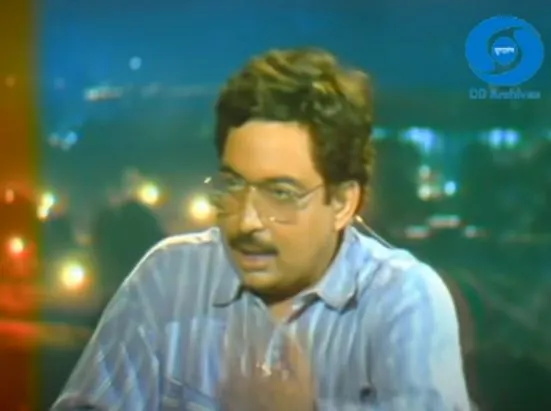
Late Vinod Dua (Source: Doordarshan)
Once, during our conversation at the JP Tea Stall at the Delhi School of Economics, Prof. K.K. Majumdar revealed that it was Prof. C.P. Singh who helped and provided ideas to Dr Yogendra Yadav in understanding electoral geography.
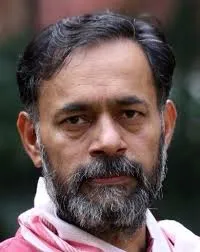
However, we should credit Dr Yogendra Yadav for taking electoral geography from the geography department library and lanes of the Delhi School of Economics to the Television Studios of Noida. In fact, Rajdeep Sardesai and Dr. Yogendra Yadav have glamorised electoral analysis. Prof. Barkatullah Khan (Ex-Head of Geography, DSE) promoted the discipline, but his approach was strictly academic. In due course, Political scientists appropriated the field.
The Political Science Embrace
Such studies deeply root their tools and concepts in geographical inquiry, including the analysis of maps, spatial data, regions, and socio-cultural landscapes. The regions often discussed, such as Awadh, Bhojpur, Vidarbha, Malwa, and Tirhut, are fundamentally geographical regions with distinct historical and cultural identities. Prof. C. D. Deshpande notably advanced the socio-cultural regionalisation of India, and later scholars such as Mamoria, Mandal, Hussain, and Tiwari elaborated on it.
At this point, I would like to acknowledge my colleagues in political science and related disciplines. Academic inquiry thrives on interdisciplinary exchange, and the study of regions naturally attracts contributions from multiple fields. As geographers, we value this dialogue and appreciate how scholars from other disciplines enrich and extend discussions that have geographical foundations. Rather than viewing the issue as a matter of disciplinary ownership, it is more productive to see it as a shared intellectual endeavour that benefits from diverse perspectives.
Exit Polls
Though the current mercenaries conducting exit polls are neither geographers nor political scientists, they rely on data provided by someone sitting at home (of course, outside the constituencies), generated by artificial intelligence with one click, or collected by an underpaid, ill-trained person working on his or her whims and fancies.
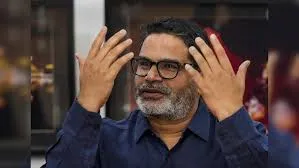
They needed to remember the key principles of electoral geography, i.e. Ground Truthing. When you have to visit the field, check the ground realities, and talk to the “real people”, it can only come by staying there for a longer period to develop a good rapport with the community. I remember our Prof. (Dr) R.B. Singh always used to say in his classes, “Think globally, act locally.” Acting locally is equally important as thinking globally. It implies that to understand the realities, the researcher has to visit the field (local areas). They (exit poll companies and poll gurus) also need to consult on how to incorporate the geography factor and undertake some political geography lessons. These pollsters cannot reach any meaningful conclusions unless they learn how Region A differs from Region B.
Winning insights start with maps, not margins.
Fazal Firdausi, Ph.D.
Expert Intervention Matters
Above all, the final data that comes from the field needs some moderation since it is based on random sampling, and biases may creep in. Senior Journalist Prabhu Chawla pointed out during the same discussion that he used to verify with his team of experts and then release the data. Therefore, my suggestion to the gentleman who was crying is to make the following changes:
- Hire good researchers with political geography and political science backgrounds.
- Incorporate “Ground Truthing”
- Make your data collection rigorous and scientific.
- Add expert opinion and moderation.
- Correlate the data with other socio-economic indicators.
It is a wake-up call for all the geographers involved in the decision-making process regarding the subject in India to provide the legitimate space for political and electoral geography that it deserves. It is also the responsibility of the Departments to upgrade the courses. Bring in technology, but remember to send people to the ground (actual space). Because Political Geography Matters!
Disclaimer: This guest post reflects the author’s views only, not those of this publication. Mention of public figures and policies is for analysis, not endorsement.

You may also like
What is Balkanization? AP Human Geography